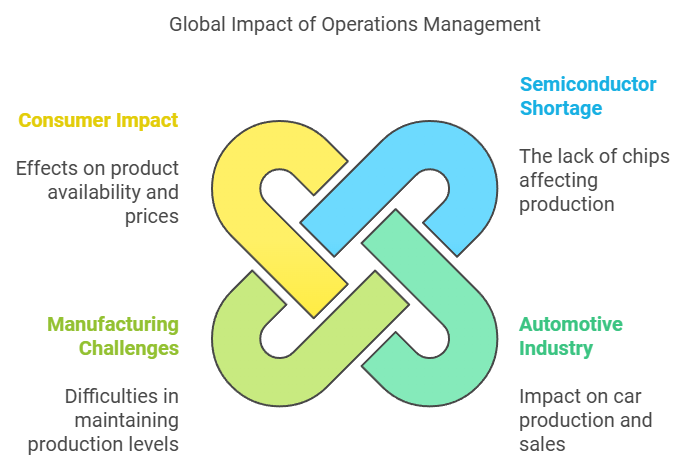
The global semiconductor shortage of 2021 brought an unexpected reality to millions of consumers worldwide: empty car showrooms, skyrocketing prices, and delivery times extending into months. This crisis wasn’t merely about missing chips; it was a stark demonstration of how operations management—or its disruption—affects every aspect of our daily lives.
When Toyota, the pioneer of lean manufacturing, had to slash production by 40% in September 2021, it became clear that unprecedented global events could challenge even the most sophisticated operations management systems (Smith, 2021).
Operations management is not just an abstract concept; it has real-world impacts that directly affect the quality, cost, and availability of products and services we use daily.
This article explores the core principles and frameworks that shape effective operations management, helping organizations thrive in a dynamic and challenging business environment.
| Key Takeaway | Description |
|---|---|
| Global Impact of Operations Management | The semiconductor shortage highlighted the importance of effective operations management. |
| Core Principles of Operations Management | Operations management focuses on maximizing efficiency and creating customer value. |
| Strategic Importance | OM is crucial for creating competitive advantage, enabling sustainability, and driving innovation. |
| Lean Manufacturing and Continuous Improvement | Lean principles aim to eliminate waste and improve processes through continuous improvement (Kaizen). |
| Six Sigma | Focuses on reducing defects and variability to achieve high-quality outputs through the DMAIC framework. |
| Theory of Constraints (TOC) | Identifies and improves the most critical limiting factor in a process to enhance overall performance. |
| Supply Chain Risk Management (SCRM) | Involves identifying, assessing, mitigating, and monitoring risks within the supply chain to ensure resilience. |
Understanding Operations Management
Operations management (OM) stands at the intersection of strategy and execution, serving as the engine that powers organizations’ ability to deliver products and services.
At its core, it encompasses the administration of business practices to maximize efficiency while converting resources—materials, labor, or technology—into goods and services that create customer value (Heizer, Render, & Munson, 2020).
Consider a morning coffee routine: behind that simple cup lies a complex orchestration of operations spanning continents. Each step represents operations management, from coffee bean farming and processing to roasting, packaging, shipping, and brewing.
This everyday example illustrates how OM touches every aspect of modern life, from the food we eat to the services we use and the products we rely on (Slack & Brandon-Jones, 2019).
Operations management is about more than just processes; it is about creating value for the customer by efficiently transforming inputs into outputs.
By understanding the principles of OM, businesses can ensure they remain competitive in today’s rapidly changing landscape.
The Strategic Importance of Operations Management
In today’s rapidly evolving business landscape, operations management has transcended its traditional role of overseeing production processes. It has become a critical strategic driver that can:
- Create Competitive Advantage: Companies like Amazon have revolutionized entire industries by excelling in operations management, turning fast delivery and efficient inventory management into market differentiators (Porter, 1985). Amazon’s ability to anticipate customer demand and streamline logistics has set a new standard in the retail industry.
- Enable Sustainability: OM is crucial in achieving environmental sustainability goals while maintaining profitability through efficient resource utilization and waste reduction (Elkington, 1997). For example, companies that adopt sustainable practices in their production processes reduce their carbon footprint and improve their brand reputation among environmentally conscious consumers.
- Drive Innovation: Integrating technologies like AI, IoT, and automation into operations has opened possibilities for customization, efficiency, and customer satisfaction (Brynjolfsson & McAfee, 2014). For instance, AI-powered predictive maintenance helps companies avoid costly downtimes by identifying potential issues before they escalate.
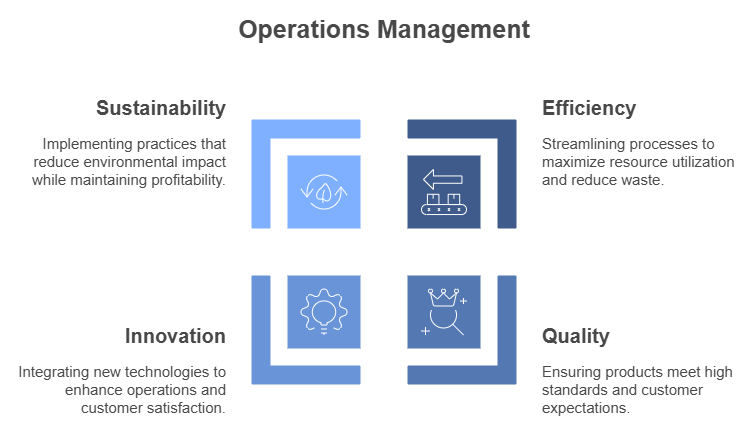
Operations management, therefore, is no longer about managing production lines; it is a strategic tool for business success, driving innovation, reducing costs, and enhancing sustainability.
I. Core Concepts and Frameworks in Operations Management
1. Lean Manufacturing and Continuous Improvement (Kaizen)
Lean Manufacturing is more than just a set of tools; it’s a philosophy that has transformed how organizations approach efficiency.
Imagine a factory struggling with excessive inventory, high defect rates, and a chaotic production schedule. Lean Manufacturing systematically identifies and eliminates waste to create a smoother, more productive workflow (Womack & Jones, 2003).
The principles of Lean focus on maximizing customer value while minimizing waste. For example, Value Identification involves determining what the customer truly values, which in turn helps companies streamline their processes to focus only on activities that add that value.
Flow Optimization ensures that production moves without unnecessary interruptions, while Pull Production aligns output with real customer demand, preventing overproduction.
Yet, Lean would be incomplete without the philosophy of Kaizen, which is continuous improvement. Kaizen is the cultural backbone of Lean, encouraging every employee to look for small, incremental improvements every day (Imai, 1986).
At Toyota, these small improvements accumulate, leading to massive gains in efficiency and quality over time (Liker, 2004).
By involving every level of the organization, Toyota’s Kaizen approach makes Lean a set of practices and a continuous pursuit of perfection.
2. Six Sigma
In contrast to Lean’s focus on eliminating waste, Six Sigma focuses on quality—specifically, reducing process variability and defects.
Six Sigma aims to achieve near-perfect quality by identifying and eliminating causes of defects (Harry & Schroeder, 2000).
Consider General Electric in the 1990s: the company faced challenges maintaining consistent quality across its diverse range of products.
By adopting Six Sigma, GE could define the problems, measure performance, analyze data, improve its processes, and implement controls to sustain these gains.
This DMAIC framework (Define, Measure, Analyze, Improve, Control) became the foundation for a company-wide cultural shift toward quality (Eckes, 2001).
Although Six Sigma requires a substantial investment in training and resources, the payoff can be remarkable. GE saved over $12 billion in just five years, transforming its operational efficiency and setting new standards for quality across the industry.
[VISUALIZATION: DMAIC Framework of Six Sigma Description: Flowchart illustrating the DMAIC steps in Six Sigma Purpose: To provide a visual understanding of the Six Sigma process]
3. Theory of Constraints (TOC)
The Theory of Constraints (TOC) is a methodology for identifying the most critical limiting factor—or constraint—that stands in the way of achieving a goal and systematically improving it until it is no longer the limiting factor (Goldratt & Cox, 1984).
Every system has at least one constraint that limits its performance. By focusing efforts on this weakest link, TOC ensures that improvements lead to meaningful increases in overall throughput.
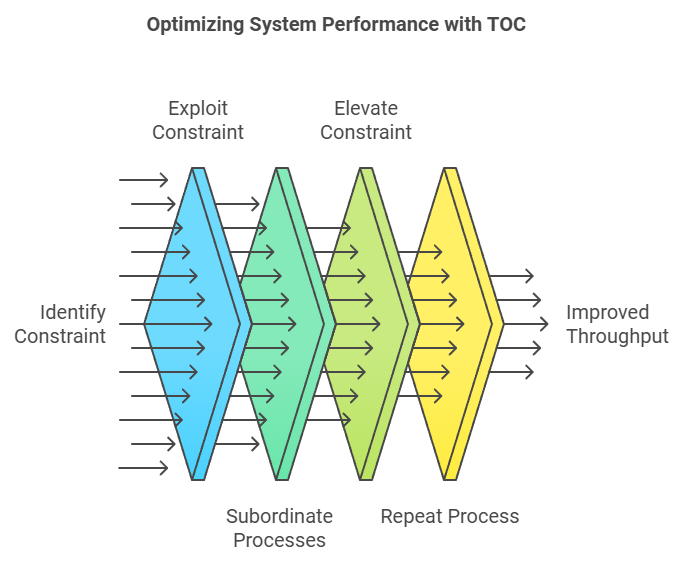
TOC uses the Five Focusing Steps to ensure continuous improvement:
- Identify the Constraint: The first step is determining the process or resource limiting the overall system’s performance. For example, a machine on a production line that cannot keep up with demand might be the bottleneck.
- Exploit the Constraint: Once identified, the next step is to ensure the constraint is utilized as effectively as possible. This might involve rescheduling tasks to ensure the bottleneck machine is always in use or optimizing its settings for better performance.
- Subordinate Other Processes: All other processes must align to support the constraint. This means adjusting the flow of work upstream and downstream to prevent interruptions at the bottleneck, ensuring it can operate smoothly without waiting.
- Elevate the Constraint: If the constraint limits performance after exploitation, consider increasing its capacity. This could involve investing in a new machine, adding shifts, or even finding alternative methods to boost production.
- Repeat the Process: Identify the next bottleneck once the current constraint is resolved. This process is continuous, as every time one constraint is removed, another will take its place as the weakest link.
By systematically addressing constraints, organizations can ensure that each improvement effort results in significant gains.
Benefits of TOC include increased throughput, reduced cycle times, and improved process flow.
Organizations can prioritize improvements that yield the greatest impact by focusing on the weakest link.
- Real-World Example: Boeing faced significant delays in its production lines due to bottlenecks in certain assembly stages. By applying TOC, Boeing identified critical bottlenecks and implemented changes to exploit these resources fully, such as optimizing schedules and reallocating labor.
- As a result, Boeing reduced its manufacturing cycle time by 50%, allowing it to meet increasing demand more efficiently (Stein, 2005).
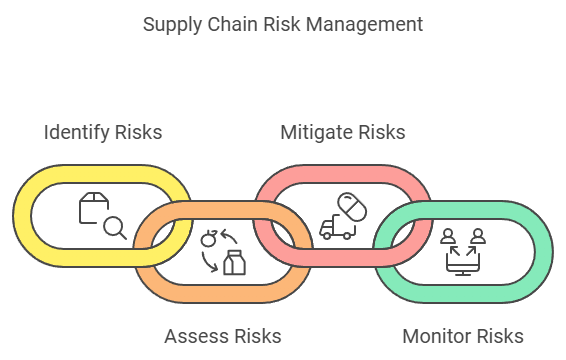
4. Supply Chain Risk Management (SCRM)
Supply Chain Risk Management (SCRM) is identifying, assessing, mitigating, and monitoring risks within the supply chain to ensure resilience and business continuity (Waters, 2011).
In an interconnected global economy, supply chains are vulnerable to numerous risks—ranging from natural disasters to geopolitical disruptions—that can significantly impact an organization’s ability to deliver products and services.
The Four Steps of SCRM:
- Identify Potential Risks: The first step is pinpointing vulnerabilities within the supply chain. These risks include supplier failures, reliance on single-source suppliers, natural disasters, or geopolitical events. For instance, during the COVID-19 pandemic, many companies faced significant challenges due to reliance on suppliers in affected regions.
- Assess the Likelihood and Impact of These Risks: After identifying risks, organizations must evaluate how likely each risk is to occur and the potential consequences. Tools like Failure Mode and Effects Analysis (FMEA) or risk heat maps can help prioritize risks based on their severity and likelihood. This step ensures that resources are allocated effectively to mitigate the most critical threats.
- Mitigate Risks Through Strategic Actions: Mitigation involves implementing measures to reduce the identified risks. Common strategies include diversifying suppliers, building inventory buffers, or developing alternative sourcing options. By diversifying suppliers, companies can minimize reliance on a single source, thus reducing the risk of complete disruption if that supplier fails.
- Monitor the Supply Chain Continuously: Continuous monitoring involves tracking shipments, supplier performance, and emerging risks. Technologies like IoT and blockchain enhance visibility and provide real-time data, allowing quicker response to potential disruptions. Monitoring ensures that organizations are always aware of the state of their supply chain and can adapt as new risks emerge.
II. Functions of Operations Management
Operations management comprises essential functions that support organizations in achieving their goals effectively. These functions include planning, organizing, leading and supervising, controlling, and continuous improvement. Each function is critical in enhancing process efficiency and strategically aligning resources with organizational objectives.
1. Planning
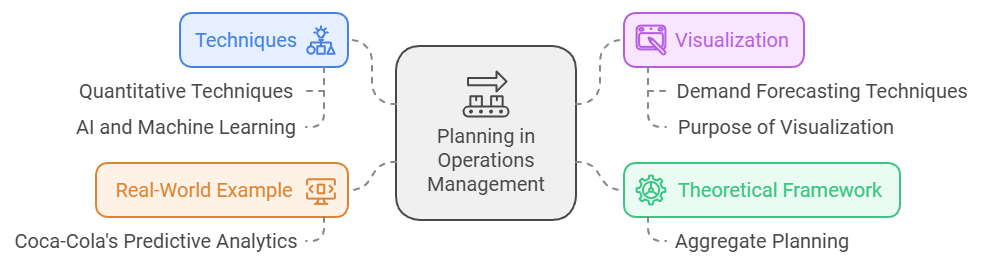
Planning is a foundational activity in operations management, encompassing demand forecasting, goal-setting, and strategy development to meet organizational objectives. Effective planning ensures that resources are allocated efficiently and the organization is equipped to face future challenges.
- Techniques: Operations managers utilize quantitative techniques like time series analysis and causal models to predict demand. With recent technological advancements, artificial intelligence (AI) and machine learning have become vital for predictive analytics, enhancing forecasting precision.
- Theoretical Framework: Aggregate Planning helps balance supply and demand, aligning production schedules and resources with projected requirements (Heizer et al., 2020).
- Real-World Example: Coca-Cola employs predictive analytics to optimize production schedules, reduce waste, and meet customer demand efficiently (Chui & Manyika, 2018).
2. Organizing
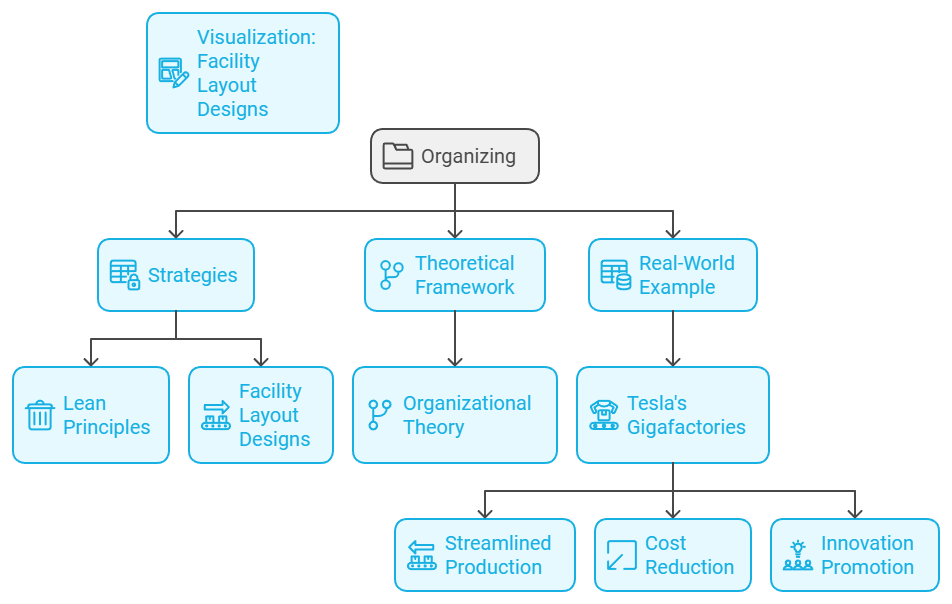
Organizing involves structuring resources and activities for the effective execution of plans. This function ensures that workflows are optimized to reduce bottlenecks and maximize productivity.
- Strategies: Lean principles are commonly applied to streamline processes, while facility layout designs are optimized to enhance operational flow and reduce unnecessary movement.
- Theoretical Framework: Organizational Theory provides insights into structuring operations to enhance coordination and efficiency across departments (Daft, 2015).
- Real-World Example: Tesla employs a vertically integrated structure in its Gigafactories, enabling streamlined production and cost reduction while promoting innovation (Lambert, 2019).
3. Leading and Supervising
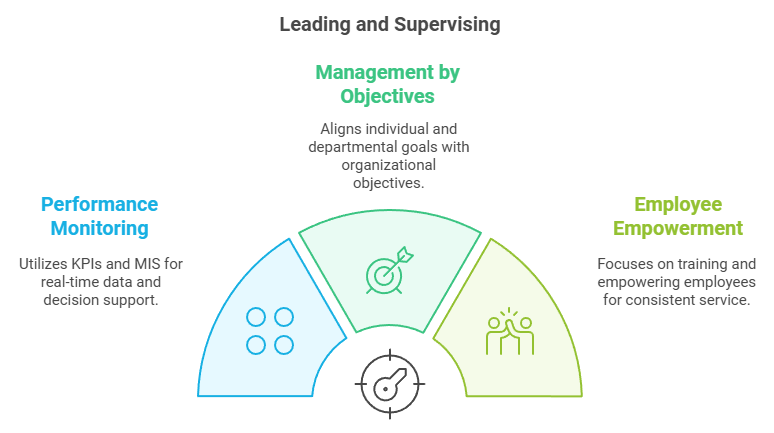
Leading and supervising are critical functions for guiding and motivating employees toward achieving organizational goals. Operations managers set performance standards and foster an environment that promotes productivity.
- Methods: Key Performance Indicators (KPIs) and Management Information Systems (MIS) monitor performance, offering real-time data that supports decision-making and performance tracking.
- Theoretical Framework: Management by Objectives (MBO) aligns individual and departmental goals with organizational objectives, fostering accountability and focus (Drucker, 1954).
- Real-World Example: Starbucks emphasizes employee training and empowerment, leading to consistent customer service and high-quality standards across its locations (Gallup, 2019).
4. Controlling
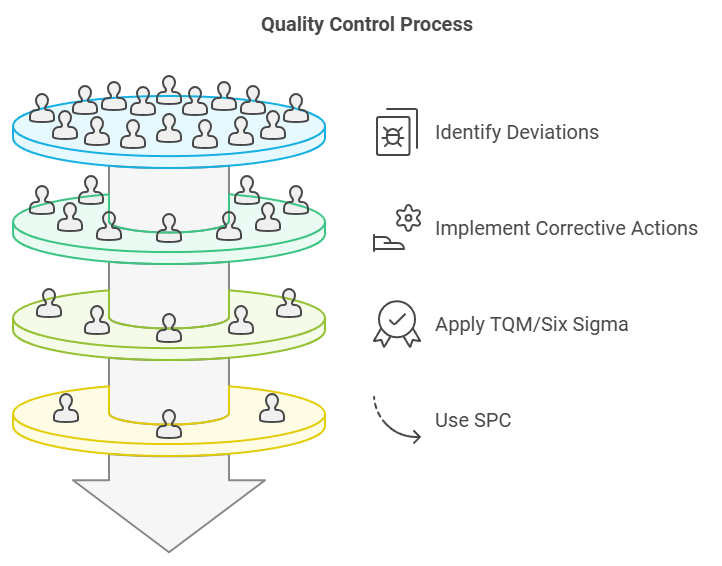
Controlling is the process of monitoring operations to ensure they align with established plans and quality standards. This function is vital for identifying deviations and implementing corrective actions to maintain optimal performance.
- Methods: Total Quality Management (TQM) and Six Sigma methodologies are commonly applied to reduce defects and improve quality.
- Theoretical Framework: Statistical Process Control (SPC) helps monitor and control quality by identifying process variations and ensuring consistency (Montgomery, 2019).
- Real-World Example: Motorola’s adoption of Six Sigma resulted in significant cost savings and quality improvements, setting an industry benchmark (Eckes, 2001).
5. Continuous Improvement
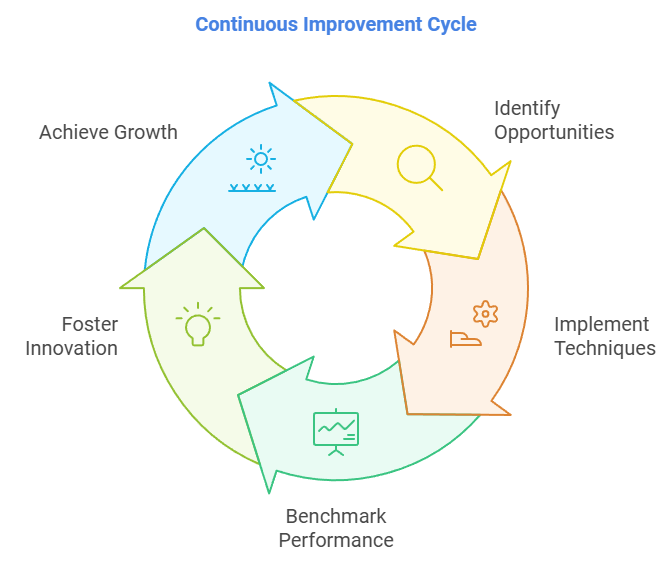
Continuous improvement is an ongoing effort to refine processes, products, and services. This function ensures that operations remain agile and responsive to changing demands, laying the foundation for sustained growth and competitiveness.
- Techniques: Lean Management and benchmarking against industry best practices are commonly used to identify improvement opportunities and foster innovation.
- Theoretical Framework: Benchmarking Theory emphasizes comparing performance metrics to identify improvement opportunities and drive operational enhancements (Camp, 1989).
- Real-World Example: 3 M’s culture of innovation allows employees to dedicate time to new ideas, leading to continuous improvement and a stream of innovative products (Govindarajan & Trimble, 2010).
III. Sustainability as a Core Principle in Operations Management
1. Sustainable Operations Practices
Sustainability has become a fundamental pillar of modern operations management, reflecting the urgency of addressing environmental challenges while achieving operational goals.
Today’s companies realize that sustainability is not just a regulatory requirement but a key to building resilient, future-ready operations.
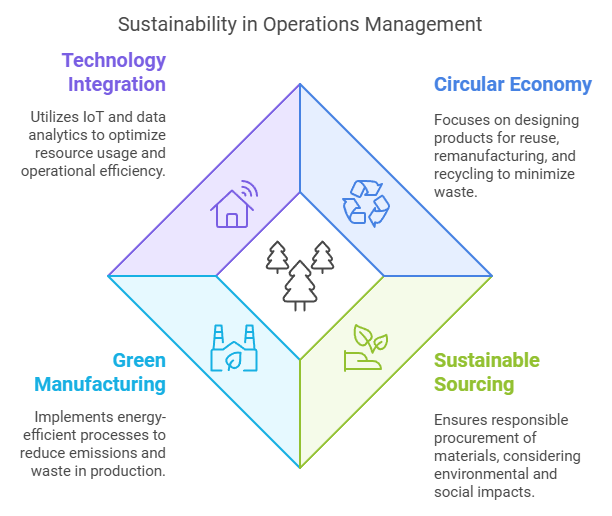
One prominent approach to sustainability is the circular economy, which focuses on designing products and systems for reuse, remanufacturing, and recycling.
Take Interface Inc., for instance. The carpet manufacturer has embraced circular economy principles by recycling old carpets into new products, thus significantly reducing waste and minimizing its environmental impact (Andersen, 2007).
By viewing waste as a resource, Interface has created a closed-loop system that benefits both the environment and its bottom line.
Another critical element is sustainable sourcing, which ensures that materials are procured responsibly, considering environmental and social impacts.
Companies like Patagonia have been pioneers in this area, meticulously tracing their raw materials to ensure they come from ethical and environmentally friendly sources.
Patagonia prioritizes transparency and ethical practices and strengthens its brand’s relationship with environmentally conscious consumers by reducing its environmental footprint.
Green manufacturing involves implementing energy-efficient processes and reducing emissions and waste throughout the production cycle.
Factories that operate with renewable energy sources and focus on minimizing chemical waste exemplify green manufacturing.
- For example, Siemens has established “green factories” focusing on energy efficiency and waste reduction, showcasing how sustainable practices can be integrated into everyday operations.
Technology plays a pivotal role in promoting sustainability in operations management. IoT sensors monitor energy consumption in real-time, allowing immediate adjustments to optimize efficiency.
Meanwhile, data analytics helps organizations identify inefficiencies and optimize resource usage. By combining technology with sustainable practices, companies can make informed decisions that benefit their bottom line and the environment.
2. Benefits of Sustainable Operations Management
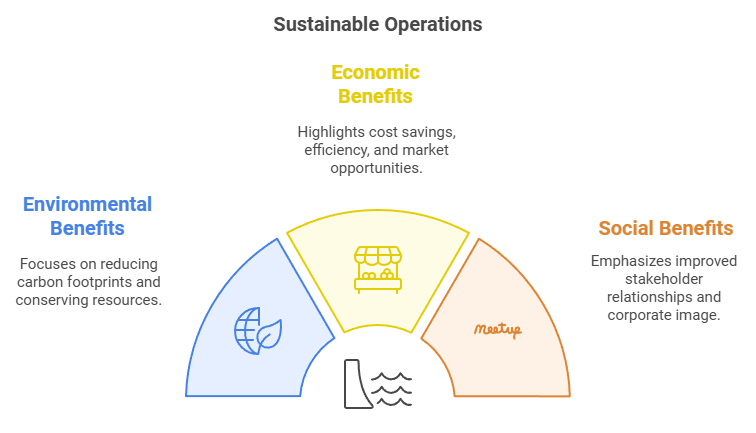
Sustainable operations yield benefits across three main areas: environmental, economic, and social.
From an environmental perspective, sustainable operations help reduce organizations’ carbon footprint and conserve natural resources. Companies can minimize their impact on the planet by using recycled materials and optimizing energy use.
- For instance, Unilever has demonstrated a commitment to reducing emissions through its Sustainable Living Plan, which has reduced over 1 million tons of CO2 emissions (Unilever, 2019).
The economic benefits of sustainability are also notable. Sustainable practices often lead to cost savings through increased efficiency, reduced waste, and better resource management.
Moreover, sustainability can enhance brand reputation, drive customer loyalty, and open new market opportunities.
- For example, Unilever reported cost savings of €600 million since the inception of its sustainability initiatives, highlighting that sustainable operations can also be financially rewarding.
On the social front, sustainable operations improve stakeholder relationships and ensure compliance with increasingly stringent environmental regulations.
Consumers today prefer brands that demonstrate a genuine commitment to sustainability, which fosters a positive corporate image.
Companies that invest in sustainable practices often enjoy stronger relationships with their customers, employees, and communities, leading to long-term success and resilience.
By adopting sustainability as a core principle, operations management can deliver significant value by improving operational efficiency and contributing positively to society and the planet.
IV. Challenges and Future Directions in Operations Management
1. Global Supply Chain Disruptions
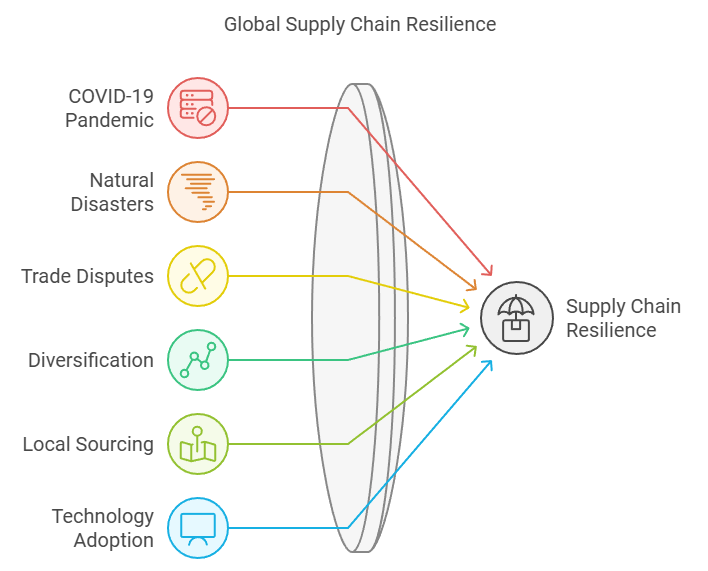
Recent years have highlighted the vulnerability of global supply chains, with events such as the COVID-19 pandemic, natural disasters, and trade disputes leading to serious disruptions.
These events affected individual supply chains and demonstrated the fragility of the global infrastructure as a whole. The COVID-19 pandemic,
- For example, led to factory closures and transportation restrictions, which profoundly affected many companies’ production and distribution capacity.
The consequences of these disruptions have been significant: production shutdowns, shortages of critical supplies, and a considerable increase in operating costs.
This situation highlighted the need for strategies to improve the resilience of supply chains.
Organizations are adopting various strategies to mitigate these disruptions, such as building more flexible supply chains, investing in local sourcing and using advanced technologies to improve visibility.
- For example, many companies diversify suppliers to avoid over-reliance on a single source.
- Apple is a case in point: the abrupt disruption of production in China during the pandemic led the company to reconsider its sourcing strategy and seek new suppliers in different regions, emphasizing the importance of diversification and flexibility to ensure operational continuity (Ivanov & Dolgui, 2020).
2. Technological Integration and Workforce Adaptation
Technological advancement in the field of operations management has brought with it both opportunities and challenges.
Integrating advanced technologies, such as automation, artificial intelligence (AI) and the Internet of Things (IoT), with existing systems is a process that takes time and effort.
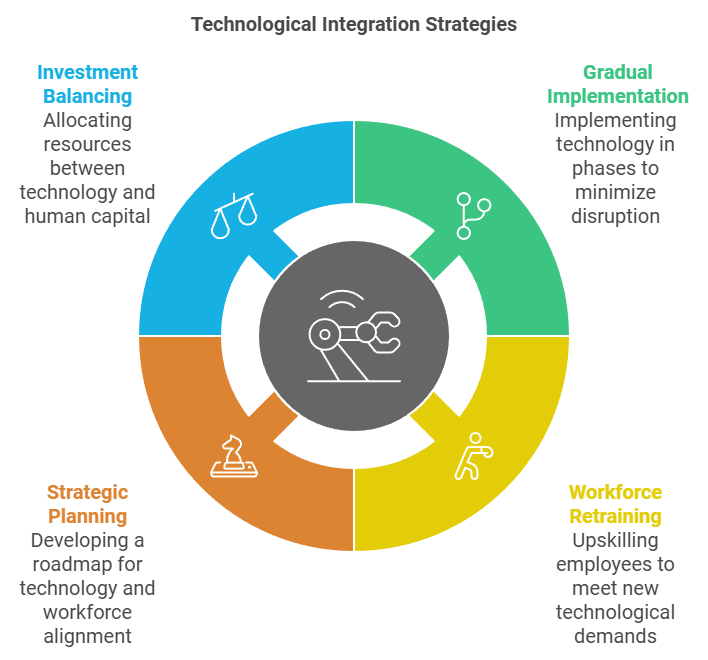
Organizations must find ways to implement these technologies without disrupting their current operations, which requires careful planning and a strategic approach.
In addition, adopting new technologies has highlighted the need to adapt and retrain the workforce. With increasing automation, many employees need new skills to work in a highly technological environment.
However, this adaptation can be challenging, and many organizations face balancing investment in technology with investment in workforce development.
An effective solution is the gradual implementation of emerging technologies, which allows companies to integrate new tools without causing significant disruption.
In addition, investment in training and skills development programs is critical to ensure employees can adapt to the changing technology landscape.
- For example, Amazon has been a leader, committing $700 million to retrain one-third of its U.S. workforce for higher-skilled positions by 2025.
- This investment ensures that its employees are prepared to work with advanced technologies transforming the logistics and distribution industry (Amazon, 2019).
For organizations to fully leverage the potential of new technologies, it is essential that they also focus on their human capital. Technology and the workforce must evolve hand in hand to ensure sustained growth and long-term competitiveness.
V. Careers in Operations Management
1. Job Roles and Responsibilities
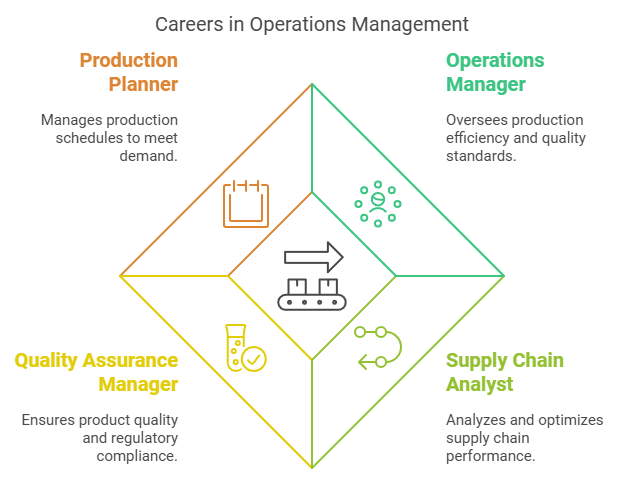
The field of operations management offers a variety of career opportunities, each playing a crucial role in supporting business success by ensuring that operations are efficient and effective. Some of the common roles in this field include:
- Operations Manager: Responsible for overseeing the production of goods or delivery of services, ensuring that processes are efficient and meet quality standards. For example, an operations manager in a manufacturing plant may implement Lean practices to reduce waste and optimize productivity.
- Supply Chain Analyst: Focuses on analyzing supply chain performance and identifying areas for improvement to optimize the flow of materials and goods. A supply chain analyst might work to reduce lead times by finding alternative suppliers or enhancing logistics efficiency.
- Quality Assurance Manager: Ensures products meet quality standards and regulatory requirements, develops testing processes, and works closely with production teams to resolve quality issues. For instance, a quality assurance manager in a food production company ensures compliance with health and safety regulations.
- Production Planner: Manages production schedules to ensure that goods are produced on time and meet customer demands, coordinating between departments such as procurement and manufacturing. Production planners must adjust schedules in response to supply chain disruptions or changes in demand.
These roles involve overseeing daily operations, implementing efficiency improvements, managing quality control, and coordinating activities across different departments. Professionals in operations management must be adaptable, detail-oriented, and capable of handling the complexities of production and supply chain activities.
2. Skills and Qualifications
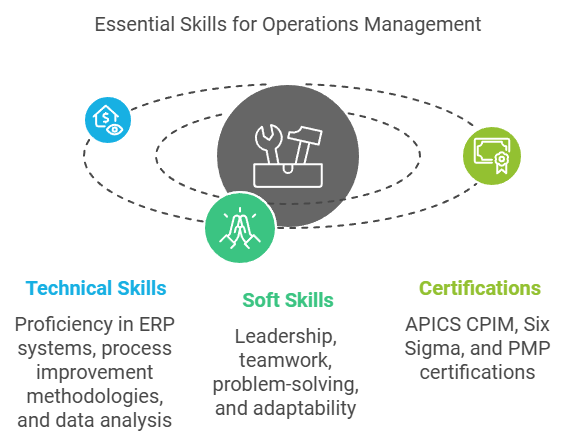
A successful career in operations management requires a combination of technical expertise and soft skills, both essential for overcoming the common challenges faced in this field. Technical skills enable professionals to optimize processes and solve operational issues, while soft skills are crucial for effectively leading teams, managing conflicts, and ensuring smooth communication across departments.
Technical skills are critical for understanding and optimizing operations, while soft skills are necessary for leading teams and solving complex problems.
- Technical Skills: Proficiency in operating software, such as Enterprise Resource Planning (ERP) systems like SAP or Oracle, is essential. Additionally, understanding methodologies like Lean, Six Sigma, and other process improvement frameworks is highly valued. Strong data analysis and interpretation skills are crucial for making informed decisions and driving operational efficiencies.
- Soft Skills: Leadership and teamwork are vital in operations management, as professionals need to coordinate across departments and lead initiatives that require collaboration. For example, a production planner must communicate effectively with procurement and sales teams to adjust schedules as needed.
- Problem-solving skills are needed to address issues that arise in production or supply chains, such as resolving a bottleneck in manufacturing. Adaptability is also important in an ever-changing business environment, where sudden disruptions may require quick strategic adjustments.
- Education: Most positions in operations management require at least a bachelor’s degree in a relevant field, such as Operations Management, Business, Engineering, or a related discipline. An advanced degree, such as an MBA, may benefit higher-level positions. Programs offered by universities known for their strong business or engineering programs, like MIT Sloan or Michigan Ross, are particularly valuable.
- Certifications: Certifications can enhance job prospects and demonstrate a commitment to professional development. Notable certifications in the field include:
- APICS Certified in Production and Inventory Management (CPIM): Focuses on improving productivity and mastering production and inventory management within an organization.
- Six Sigma Green Belt and Black Belt: Certifications demonstrating proficiency in process improvement and quality management techniques.
- Project Management Professional (PMP): Recognized for demonstrating competence in managing projects, which is often crucial in operational roles.
3. Job Outlook and Salaries
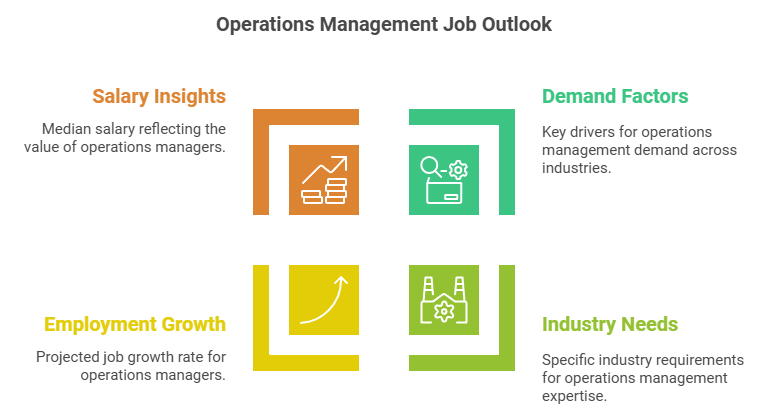
The demand for operations management professionals continues to grow as companies increasingly focus on optimizing efficiency and reducing costs.
Technological advancements, such as automation and data analytics, require skilled professionals who can leverage these tools to improve business processes.
Industries such as healthcare, manufacturing, logistics, and retail are particularly in need of operations management professionals to navigate challenges related to supply chain complexity, efficiency improvements, and technological integration.
- Demand Factors: The need for operational efficiency, cost reduction, and technological integration are key drivers of demand for operations management professionals. Industries like healthcare, manufacturing, and logistics need individuals who can navigate complex supply chains, implement process improvements, and utilize technology to streamline operations.
- Statistics: According to the Bureau of Labor Statistics (2023), employment of operations managers is projected to grow 10% from 2021 to 2031, which is faster than the average for all occupations. This growth is fueled by the need for companies to remain competitive by improving their operational processes. Regarding compensation, the median annual wage for operations managers was $109,760 in May 2022, reflecting the high value placed on professionals with the skills to oversee business operations effectively.
Operations management offers a dynamic career path with opportunities for growth and specialization. Whether working in manufacturing, logistics, healthcare, or other industries, professionals in this field are vital in driving organizational success and efficiency.
As businesses adapt to changing technologies and global challenges, the importance of skilled operations management professionals will only continue to grow.
VI. Conclusion
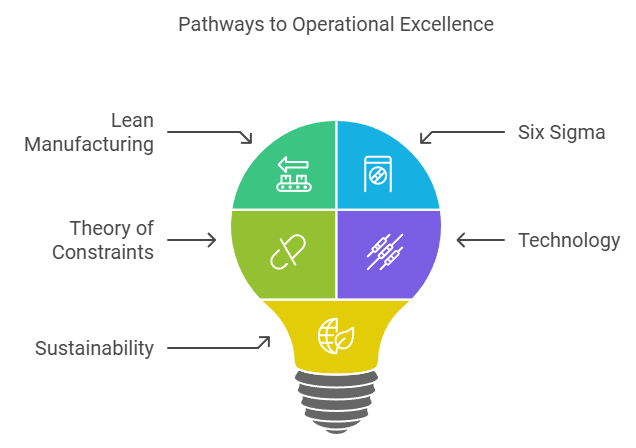
Operations management ensures efficiency, quality, and sustainability across various industries. This article has explored core concepts like Lean Manufacturing, Six Sigma, and the Theory of Constraints (TOC), each contributing significantly to an organization’s success. By implementing these practices, businesses can achieve streamlined operations, reduced waste, and enhanced quality.
The importance of technology and sustainability in operations management will continue to grow. Organizations must adapt to changing environments, leverage new technologies, and invest in innovation to remain competitive. Sustainability is no longer optional but an integral part of achieving operational excellence.
For businesses, adopting best practices in operations management is crucial for success. Organizations can thrive in an increasingly complex world by embracing efficiency initiatives, focusing on quality, and promoting sustainable practices. For professionals, continuous learning and development are key to staying ahead in this dynamic field.
As W. Edwards Deming aptly said, “It is not enough to do your best; you must know what to do and then do your best.” Effective operations management embodies this principle, driving organizations toward excellence.